- General
- August 30, 2025
- 7 minutes read
Explainer: Africa’s Solar Energy Boom In 2025
African countries are importing a record volume of electricity-generating solar panels from China, customs data indicate. 54 African nations imported…
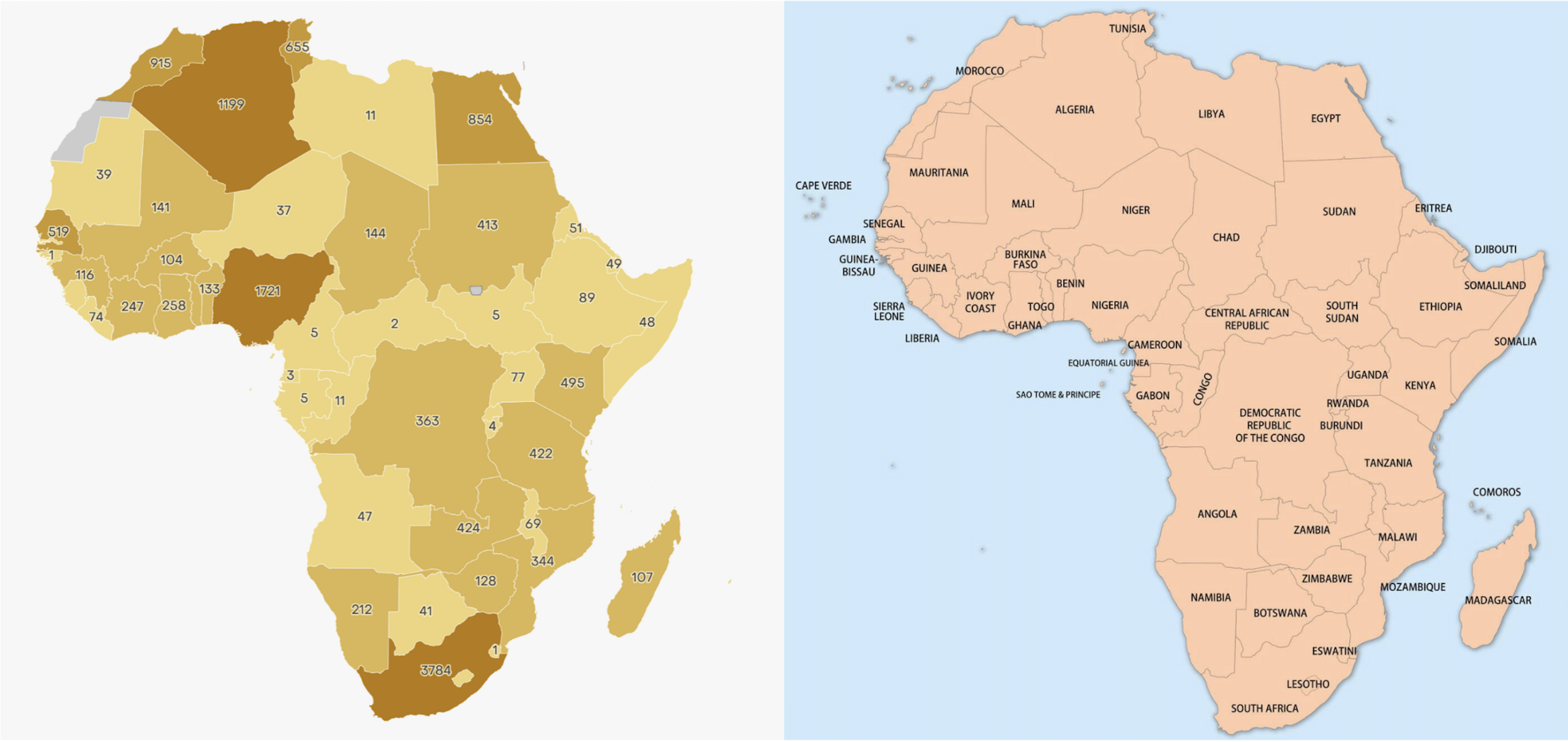
African countries are importing a record volume of electricity-generating solar panels from China, customs data indicate. 54 African nations imported 15 Gigawatts (GW) worth of Chinese-made solar panels in the 12 months leading up to June 2025, a 60% year-on-year jump, according to customs data examined by Ember, a U.K.-based energy think tank.
South Africa, Africa’s most industrialized country and the continent’s largest electricity generator, imported 3.8 GW of solar panels during the period, retaining its long-held position as the continent’s largest solar panel importer. Nigeria, Africa’s most populous and energy-deficient country, came second with 1.7 GW of imports, and Algeria came third with 1.2 GW of imports. Other standouts include Egypt (0.85 GW), Tunisia (0.65 GW), and Senegal (0.5 GW).
- Nigeria has been facing a long-standing electricity crisis. With over 230 million people and a steadily growing population over the past few decades, electricity demand has skyrocketed, while supply has lagged behind. 90 million Nigerians aren’t connected to the electricity grid, the highest number of any country. The population with access to the electricity grid faces frequent blackouts due to a shortfall in generation, transmission, and distribution infrastructure.
- Unsurprisingly, with Chinese solar panel prices recently falling to their lowest levels ever seen, Nigerian individuals and commercial firms have imported a record volume of solar panels to compensate for severe electricity shortfalls.
- Although Nigeria has a theoretical grid generation capacity of 13 GW, a creaking power grid and strained supplies of natural gas, which produce most of Nigeria’s electricity, cause an average of 4,500 MW, or one-third of the theoretical capacity, to be delivered at any given time. In March 2025, the Nigerian electricity grid achieved its highest-ever power generation, reaching 5.8 GW.
For reference, 1.7 GW of solar panels imported in a single year is almost one-third of Nigeria’s highest-ever grid generation capacity. The situation becomes less astounding considering that solar panels only work when the sun shines, unlike natural gas and hydroelectric power plants, which operate 24/7 if needed, and which Nigeria largely depends on for electricity generation. Yet, it demonstrates the rapid expansion of solar energy in African countries experiencing severe electricity shortages.
Over 640 million Africans, out of a total of roughly 1.5 billion, aren’t connected to the electricity grid, the highest of any continent. Those connected to the electricity grid often experience frequent blackouts because of generation shortfalls and aging transmission and distribution infrastructure. Modern economic activities rely heavily on electricity, making this shortfall a major hindrance to Africa’s economic and social development.
Unlike other continents, where large utility-scale power plants account for most solar panel generation, the growth in Africa appears to be driven by smaller-scale residential and commercial installations. Satellite images indicate that solar panel arrays are increasingly dotting the rooftops of homes, schools, hospitals, offices, and factories across Africa. Yet, they aren’t as commonly found as in more economically developed regions.
According to the International Energy Agency (IEA), solar power is the cheapest new source of electricity. The data indicate that African countries are increasingly turning to this relatively cheap source of electricity to save costs. Yet, zooming out a bit, Africa’s solar power generation significantly lags behind that of more economically developed continents.
Despite having the most abundant sunshine, which translates to 60% of the world’s solar resources, Africa accounts for only 1% of the world’s solar energy generation capacity, according to the IEA. Additionally, solar energy accounts for only 3% of Africa’s current electricity generation capacity, indicating a massive gap that needs to be addressed. The good news is that solar energy growth in Africa doesn’t appear to be slowing down soon, but there’s a need for large-scale investments, especially in utility-scale plants.
Despite the solar energy boom, African nations continue to rely heavily on fossil fuels for most of their electricity generation. Fossil fuels account for over half of the electricity generation capacity, mainly coal, fuel oil, and natural gas.


